
A marketing plan does not need to be a 40-page document. For most small businesses, a clear one-page plan that answers eleven questions beats a long strategy deck nobody opens again.
Below is a free template you can copy, a worked example for a local service business, and the mistakes that make most plans fail. If you would rather have a first draft written for you, try our free AI Marketing Plan Generator.
The marketing plan template
Copy these eleven sections into a document and answer each one in a few lines. The example column shows the level of detail that is useful: specific, numeric and short.
| Section | Questions to answer | Example (local plumber) |
|---|---|---|
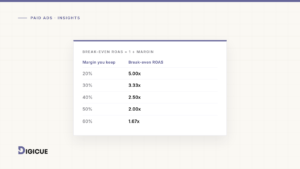
| 1. Business snapshot | What do you sell? What is an average sale or job worth, and what margin do you keep? How many new customers can you handle a month? | Residential plumbing; average job $650; about 45% gross margin; capacity for 25 extra jobs a month. |
| 2. Goal | What result do you want, by when? Make it a number you can count. | 20 extra booked jobs a month by the end of March. |
| 3. Ideal customer | Who buys, what problem are they solving, where do they look, and what stops them? | Homeowners in the eastern suburbs with an urgent leak; search on Google; worried about price and call-out delays. |
| 4. Offer | Why should they choose you, and why now? | Fixed-price call-out, arrival within 2 hours, upfront quote before work starts. |
| 5. Channels | Which two or three channels reach that customer best? Capture demand first, then create it. | Google Ads and Google Business Profile first; Meta retargeting later. |
| 6. Budget | How much can you spend to win one customer, and how many customers do you need? | Up to $120 in ads per booked job; about $2,400 a month to start. |
| 7. Content and creative | What will you publish or advertise, and how often? | Three ad variations a month; a weekly Google Business Profile post; two guides a month. |
| 8. Website and conversion | Where does each channel send people, and how do they contact you? | One landing page per service; click-to-call and a short form; reviews above the fold. |
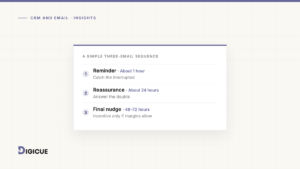
| 9. Follow-up | What happens after an enquiry, and how fast? | Every enquiry called within 15 minutes; quote sent the same day; reminder after two days. |
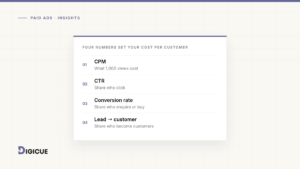
| 10. Measurement | Which numbers will you check, and where? | Leads, cost per lead, booked jobs, cost per job, revenue; reviewed every fortnight. |
| 11. 90-day action plan | What exactly happens in weeks 1–4, 5–8 and 9–12? | Weeks 1–4: tracking, landing pages, launch ads. Weeks 5–8: test offers. Weeks 9–12: scale what works. |
Quick check
If you cannot fill in section 1 with real numbers (average sale value and margin), stop there first. Every budget and channel decision depends on it.
How to fill it in
- Start with the numbers, not the channels. Sections 1, 2 and 6 decide what you can afford. Channels come after.
- Pick fewer channels. Two channels done properly beat six done half-heartedly. Start where your customers already look.
- Write the offer in one sentence. If you cannot, customers will not understand it either.
- Plan the follow-up as carefully as the ads. Slow replies waste more marketing budget than poor ads.
- Decide how you will measure before you launch. Set up tracking first, so the first month’s results are usable.
The five mistakes that make plans fail
- Goals that cannot be counted (“grow brand awareness”) instead of customers or revenue.
- Budgets chosen by feel instead of from what a customer is worth.
- Every channel at once, with no time or money to do any of them well.
- Sending all traffic to the homepage instead of a page that matches what was promised.
- No review rhythm, so the plan is written once and never updated.
A one-page version
If eleven sections feels like too much, cut it to five lines: who you are targeting, what you are offering, where you will reach them, how much you will spend to win a customer, and which number tells you it is working. Review it every two weeks.
When to get help
A plan is only as good as the information behind it. If you are unsure whether your problem is traffic, conversion, tracking or follow-up, run the free Marketing Health Check, or ask for a free growth plan built around your own numbers.
Frequently asked questions
Your numbers (sale value and margin), a countable goal, your ideal customer, your offer, two or three channels, a budget, content, website conversion, follow-up, measurement and a 90-day action plan.
Long enough to answer the eleven questions above: usually one to three pages. A short plan you review every fortnight beats a long one you never open.
Work it out from what a customer is worth and how many you need, rather than a percentage rule. Our budget calculator shows the maths.
Check the numbers every two weeks and rewrite the plan every quarter, or sooner if something big changes.